


End grain & care
Understand your board to make it last.
An end-grain board does not behave like an ordinary board. Its assembly, the orientation of its fibres and its finish give it particular qualities, but also call for a few simple habits to keep the wood in good condition.
Well looked after, an LPBB board is made to stay with you for many years.
What is end grain?
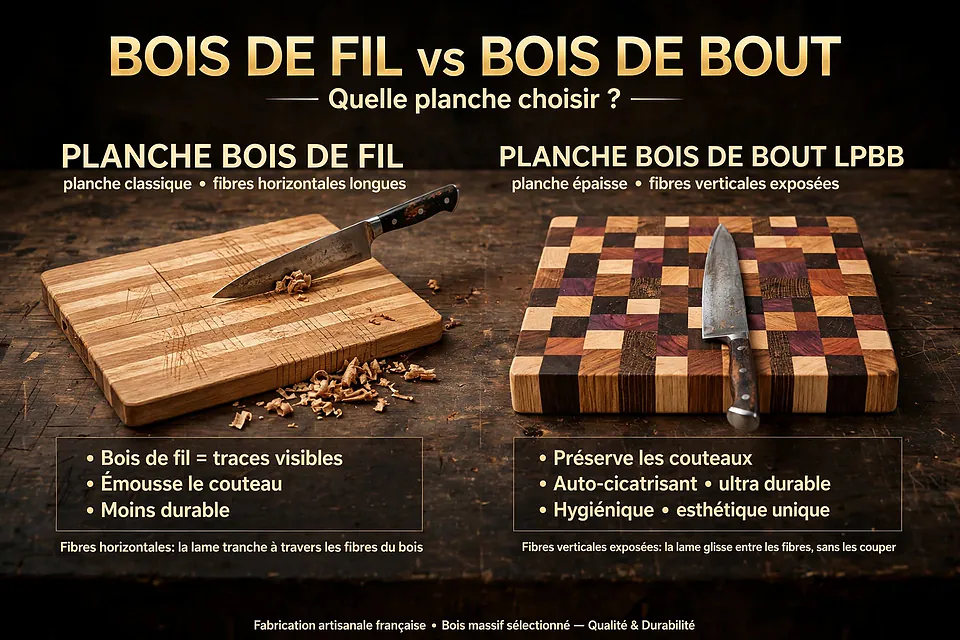
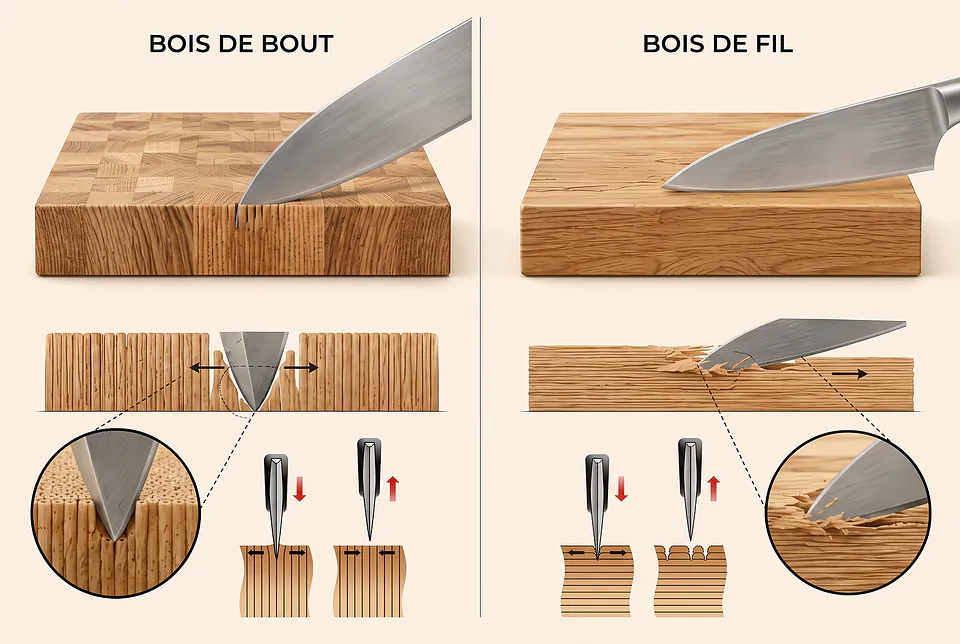
On a traditional board the fibres generally run lengthwise. On an end-grain board the pieces are assembled so that the ends of the fibres face the working surface.
Kinder to your knives
When the blade meets end grain, the fibres tend to part slightly under it rather than being cut directly across. End grain tends to mark less and is gentler on the edge than a traditional board.
Cleaning your board
After each use: warm water, a little mild soap, a sponge or non-abrasive cloth. Rinse quickly, wipe off excess water, then let it finish drying on its edge so air reaches both faces.
What never to do
- ✕No dishwasher.
- ✕Never leave it soaking in water.
- ✕Do not leave the board damp and flat for hours.
- ✕Do not put it against a heat source to speed up drying.
- ✕Avoid harsh or abrasive cleaning products.
Caring for and feeding the wood
Over time and with washing, the wood gradually loses part of its protection. When it looks paler, drier or slightly dull, it is time to feed it.
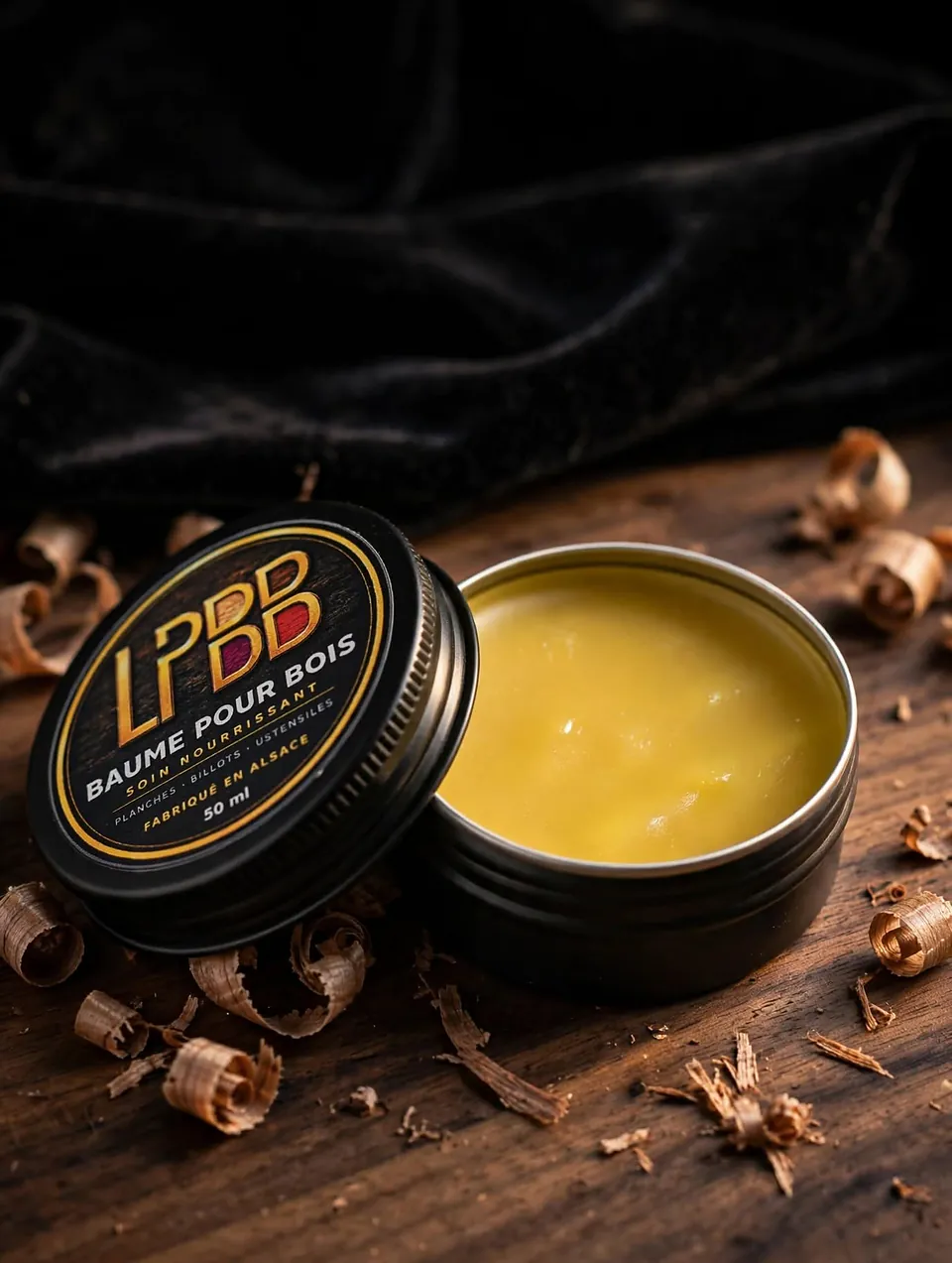
The LPBB care balm
Made of food-grade mineral oil and organic beeswax. It feeds the wood, revives its colours and leaves a protective layer on the surface. For a board in regular use, care roughly once a month is a good baseline. The best indicator remains the wood itself: if it looks dry, it is time to feed it.